
Loading...
Serving Hemet, CA and surrounding areas. (951) 467-1314
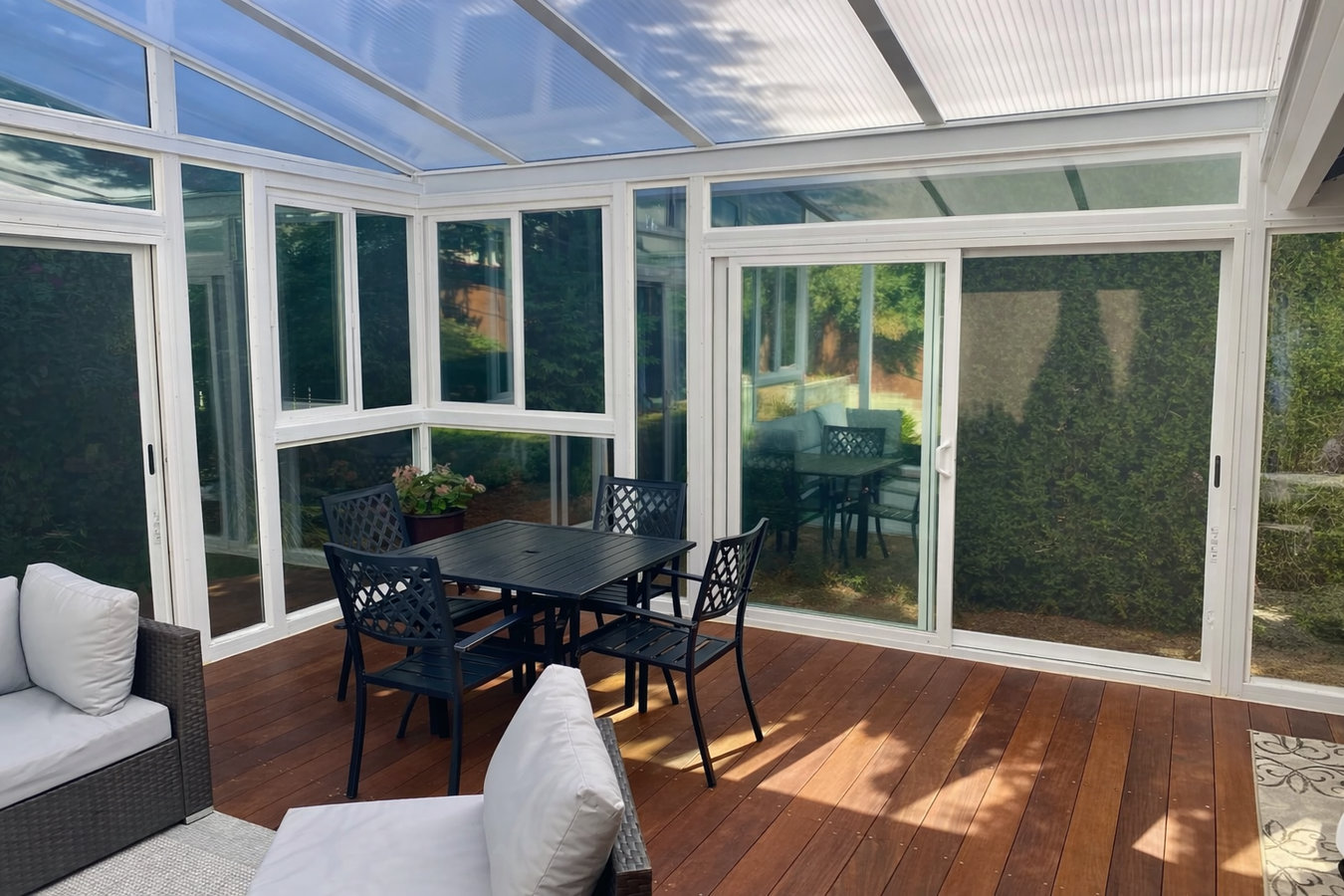
Hemet Sunrooms and Patios is your local sunroom contractor in Moreno Valley, CA, building patio enclosures, four season sunrooms, and all season rooms for homes across the city - from the neighborhoods near March Air Reserve Base to the newer streets in Rancho Belago.
We respond to new inquiries within one business day and handle the City of Moreno Valley permit process from application to final inspection.
Most single-family homes in Moreno Valley were built with open covered patios that get very little use in summer because there is no protection from the heat, dust, and Santa Ana wind events that roll through the Inland Empire. Patio enclosures convert those underused structures into protected outdoor rooms without requiring a full foundation addition, which makes them one of the most practical upgrades for a Moreno Valley tract home.
Moreno Valley summers hit 100 degrees regularly, and a four season sunroom with solar-control glass and proper insulation gives you a room that functions in July and August - not just in the mild months. Homes in the eastern Rancho Belago area with larger rear yards are particularly well suited for a full sunroom addition.
Moreno Valley winters are mild but frost is real - nighttime temperatures drop below freezing several times each year between December and February. An all season room with insulated framing and a climate control connection handles both the heat and the cold, making the space genuinely usable twelve months a year.
Newer Moreno Valley homes in Rancho Belago and similar developments tend to have larger footprints and more complex rooflines than the older western-side tract homes. A custom sunroom is designed around your specific structure rather than forced to fit a standard kit dimension that may not align with your roofline or lot.
In the Inland Empire heat, wood frames dry out, crack, and need regular repainting to stay serviceable. Vinyl framing holds up under sustained UV and temperature swings without those maintenance demands, and it will not show the bleaching and fading that wood does after a few Moreno Valley summers.
Some Moreno Valley homes built in the 1980s and early 1990s have existing sunroom-style additions that were not built with solar-control glass or proper insulation. Remodeling those older structures - upgrading the glazing, improving the seals, adding climate control - can make them usable in summer without tearing out and starting over.
Moreno Valley sits in the Inland Empire at roughly 1,600 feet elevation, surrounded by mountains and cut off from the cooling marine layer that moderates temperatures along the coast. Summer heat here regularly exceeds 100 degrees Fahrenheit, and the city averages around 35 days per year above that threshold. That sustained heat puts stress on roofing materials, exterior caulk, and any building product rated for coastal or moderate climates. A sunroom built for these conditions needs solar-control glass as a baseline requirement, not an optional upgrade - standard residential glazing will make the room unusable by mid-morning on a typical July day. The same applies to frame materials, insulation values, and sealant products, all of which must be chosen to perform in an inland desert-edge climate.
The clay-heavy soils under most Moreno Valley properties add a structural dimension that contractors unfamiliar with the Inland Empire often miss. These soils expand significantly when wet and contract when dry, creating a seasonal movement cycle that stresses concrete slabs, cracks flatwork, and shifts foundations over time. Most of Moreno Valley was built between 1980 and 2005, which means a large share of the city's concrete slabs have been through 20 to 45 years of that expansion-contraction cycle. Before any sunroom or enclosure is built on an existing slab, that slab needs to be inspected. Santa Ana wind events in fall and early winter add a third factor - gusts reaching 50 to 70 mph can damage rooflines and loosen connections between structures in a single night, so attachment methods matter. We account for all of these conditions in every project we take in Moreno Valley.
Our crew works throughout Moreno Valley regularly, and we pull permits through the City of Moreno Valley Building and Safety Division on every permitted project. The homes we see most in Moreno Valley are single-story and two-story stucco tract homes built by production homebuilders from the early 1980s through the mid-2000s. The older western neighborhoods near March Air Reserve Base tend to have smaller lots and older concrete flatwork, while the eastern side near Rancho Belago has newer two-story homes with larger footprints and more outdoor space. That difference in home age and lot size shapes the scope of almost every project - the older western homes often need slab inspection and sometimes repair before an enclosure can go up, while the newer eastern homes typically have more configuration options for a sunroom addition.
Moreno Valley is one of the larger cities in Riverside County, stretching from the 60 Freeway on the north side to the hills near Lake Perris State Recreation Area to the south. The Sunnymead Boulevard and Alessandro Boulevard corridors run through the center of the city and are familiar reference points for anyone who has spent time here. Most residential neighborhoods are accessible from Perris Boulevard, Heacock Avenue, and Lasselle Street, and we navigate those routes regularly for estimates and job sites.
We serve homeowners in the cities surrounding Moreno Valley as well. Residents in Perris to the south face similar clay soil conditions and comparable home ages, and we work there regularly. Homeowners to the west in Beaumont are also part of our regular service territory.
Reach us by phone or through the estimate form and we will respond within one business day. We ask a few upfront questions about your existing patio structure, rough dimensions, and what you want the space to do - so the site visit is focused and we are not wasting your time on a walk-around that could have been addressed in five minutes.
We come to your Moreno Valley property at no charge, measure the space, and inspect the concrete slab for cracking and settling. Slab condition directly affects your project cost - if there is movement that needs to be addressed, we tell you clearly at this visit before a contract is signed. You get a real number, not a vague starting-at figure.
We handle the City of Moreno Valley permit application and manage the inspection schedule so you do not have to track it. Once permits are approved, construction typically runs three to five weeks depending on room size and site complexity. We keep you updated on schedule, and we do not leave a job site without telling you where things stand.
After the city final inspection clears, we do a walkthrough with you to confirm everything meets the agreed scope. Any punch-list items are handled before we consider the job complete. We leave your property clean and give you any documentation you need for insurance or HOA records.
We serve homeowners across Moreno Valley - from the older neighborhoods near March Air Reserve Base to the newer streets in Rancho Belago. Call us or submit your project details and we will reply within one business day.
(951) 467-1314Moreno Valley is one of the largest cities in Riverside County, with a population of around 210,000 people spread across a wide valley in the Inland Empire. The city grew rapidly from the early 1980s through the mid-2000s as affordable home prices drew families from Los Angeles and Orange County looking for more space. That growth pattern is visible in the housing stock - the western side of the city, near March Air Reserve Base, has the older neighborhoods built first, while the eastern side around Rancho Belago reflects the later phases of development, with newer two-story homes on larger lots. The Sunnymead area along the main commercial corridors is one of the city's established centers, flanked by residential streets that fill in on all sides. Homeowners in the adjacent city of Perris to the south deal with the same Inland Empire climate and clay soil conditions and are a regular part of our service territory.
The housing stock across Moreno Valley is almost entirely stucco-clad single-family detached homes with concrete tile roofs - the standard construction for this part of inland Southern California. Most were built between 1980 and 2005, which puts a large share of them in the age range where roofing systems, concrete flatwork, and exterior finishes are at or past their expected service life. Clay-heavy soils underneath most of the city have been moving for decades, and the visible results are cracked driveways, uneven walkways, and shifted patio slabs that homeowners notice when they start thinking about outdoor improvement projects. Lake Perris State Recreation Area to the south is a landmark most Moreno Valley residents know well and a regular reference point for the southern edge of the city. We also serve homeowners in Banning, which sits just to the east through the San Gorgonio Pass.
We serve all of Moreno Valley - near March Air Reserve Base, Rancho Belago, Sunnymead, and everywhere in between. Call today or submit your project details and we will respond within one business day.